Keeping the Lights On: Long-Term Maintenance Strategies for Custom LFS Systems in Production

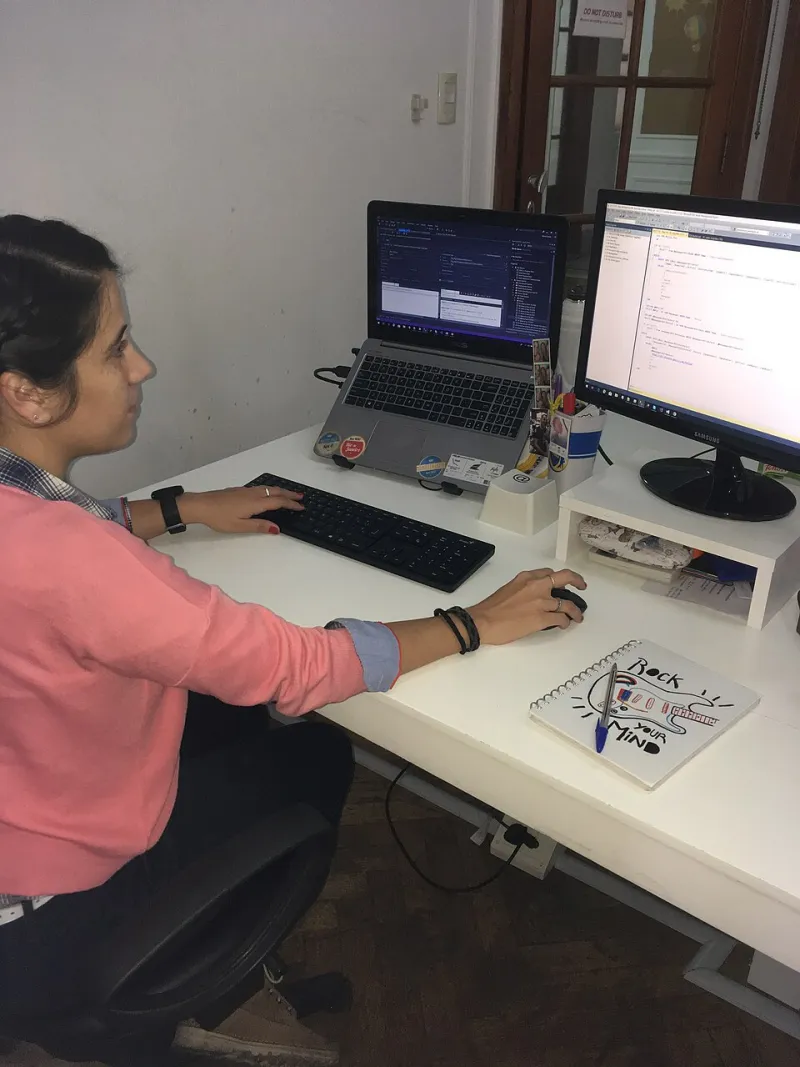
Photo: train_photos, CC BY-SA 2.0, via Wikimedia Commons
The LFS book will walk you through building a complete Linux system from source. What it cannot fully prepare you for is the morning, six months later, when a critical CVE drops against a core library and you realize that your meticulously assembled system has no upgrade path you thought through in advance.
This is not a criticism of the LFS project. The build process is the curriculum. But for developers who have moved beyond learning exercises and are running custom Linux systems in production—whether on a home lab server, a small business network, or an edge deployment—the post-build maintenance question is the one that determines whether the investment pays off over time.
The developers who have managed this successfully share a set of habits, tools, and mental models that are worth examining in detail.
Treat the Build as a Reproducible Artifact, Not a One-Time Event
The single most important shift in thinking for long-term LFS maintenance is this: your running system should be considered an instance of a build process, not the build process itself.
Developers who struggle with maintenance are typically those who built their system interactively, making small adjustments along the way without recording them, and who now have a running environment they cannot reliably reproduce. When a critical package needs updating, they face a system whose exact state they do not fully understand.
Developers who manage their systems successfully almost universally maintain some form of build record. This ranges from simple shell scripts that replay the installation steps for each package, to structured build systems using tools like make, Ansible, or custom Python wrappers that track package versions, configure flags, and patch sets in a version-controlled repository.
The specific tooling matters less than the discipline. If you can rebuild any component of your system from recorded instructions, you are in a fundamentally different position than if you cannot.
Establishing a Patch Workflow Before You Need One
Security patches arrive on their own schedule, not yours. Having a defined workflow for applying them before a vulnerability is announced against your system is the difference between a managed response and a crisis.
A practical patch workflow for an LFS system typically involves three components:
A monitoring mechanism. Subscribe to the relevant upstream security mailing lists for the packages you have installed. The oss-security mailing list, maintained by the open-source security community, covers a broad range of packages and is a reliable signal for issues that require attention. For critical infrastructure packages—glibc, OpenSSL, the kernel itself—direct upstream security announcements are worth tracking separately.
A staging environment. Before applying any patch to a production system, test it somewhere else first. For many LFS builders, this means maintaining a second build environment—often a virtual machine or a spare physical host—where patches can be applied and tested against representative workloads. This step is frequently skipped under time pressure and frequently regretted afterward.
A documented rollback procedure. Know how you will recover if a patch introduces a regression. For most LFS systems, this means maintaining filesystem snapshots (using LVM thin provisioning, ZFS snapshots, or similar mechanisms) that can be restored within minutes. A rollback procedure that exists only in theory is not a rollback procedure.
The Dependency Tracking Problem
One of the genuine challenges of an LFS system, compared to a distribution that uses a package manager with dependency resolution, is that the relationships between installed components are not formally recorded anywhere by default.
This becomes consequential when updating a shared library. Updating libssl, for example, may require rebuilding every application that links against it—but without a dependency database, identifying those applications requires either manual research or tools that inspect the running system.
Several approaches help here. The ldd utility can report the shared library dependencies of individual executables, and a simple script that runs ldd against every binary in /usr/bin, /usr/sbin, and /usr/lib can produce a serviceable dependency map. More structured solutions include lightweight package management layers built on top of LFS, such as pkgsrc or custom implementations using tools like stow for filesystem management and a simple SQLite database for recording what was installed and when.
Developers who have maintained LFS systems in production for five years or more almost universally arrive at some form of this solution independently. The specific implementation varies; the underlying need does not.
Version Pinning and the Update Cadence Question
Not every package needs to be on the latest version at all times. One of the advantages of managing your own system is the ability to make deliberate decisions about update cadence rather than accepting whatever a distribution's release cycle imposes.
For packages that face the internet directly—web servers, TLS libraries, SSH daemons—a policy of prompt security updates is non-negotiable. For internal tooling and stable infrastructure components, a more conservative posture is often appropriate.
Documenting your version pinning decisions explicitly—noting not just what version a package is at, but why you have chosen not to update it—prevents future confusion and makes handoffs to other maintainers significantly less painful. This documentation cost is modest and its value compounds over time.
Learning from the Community's Long-Term Maintainers
The LFS community forums and mailing lists contain years of accumulated experience from developers who have navigated exactly these challenges. A recurring theme in discussions among long-term maintainers is the value of engaging with the community before a problem becomes urgent.
Builders who participate actively—answering questions about their own experiences, sharing build scripts and patch sets, contributing to BLFS documentation—tend to have stronger support networks when novel problems arise. The community's institutional knowledge is a genuine resource, and it is most accessible to those who have contributed to it.
Several experienced maintainers also recommend periodic rebuilds—not because the running system is broken, but as a discipline that keeps build knowledge fresh and surfaces dependencies that have accumulated without documentation. A full rebuild once per year, even if the resulting system is not immediately deployed, is a form of maintenance in itself.
The Long View
A custom Linux system built from source represents a significant investment of time and expertise. Protecting that investment requires treating maintenance not as an afterthought but as a discipline with its own tooling, workflows, and community engagement.
The developers who have run LFS systems in production for years are not exceptional in their technical ability. They are exceptional in their organizational habits. They record what they build, monitor what they deploy, test before they change, and participate in the community that makes all of it possible.
Those habits are learnable, and the time to develop them is before the next CVE lands in your inbox.