Compiling Careers: How Five DevOps Engineers Rebuilt Their Expertise One Source Package at a Time
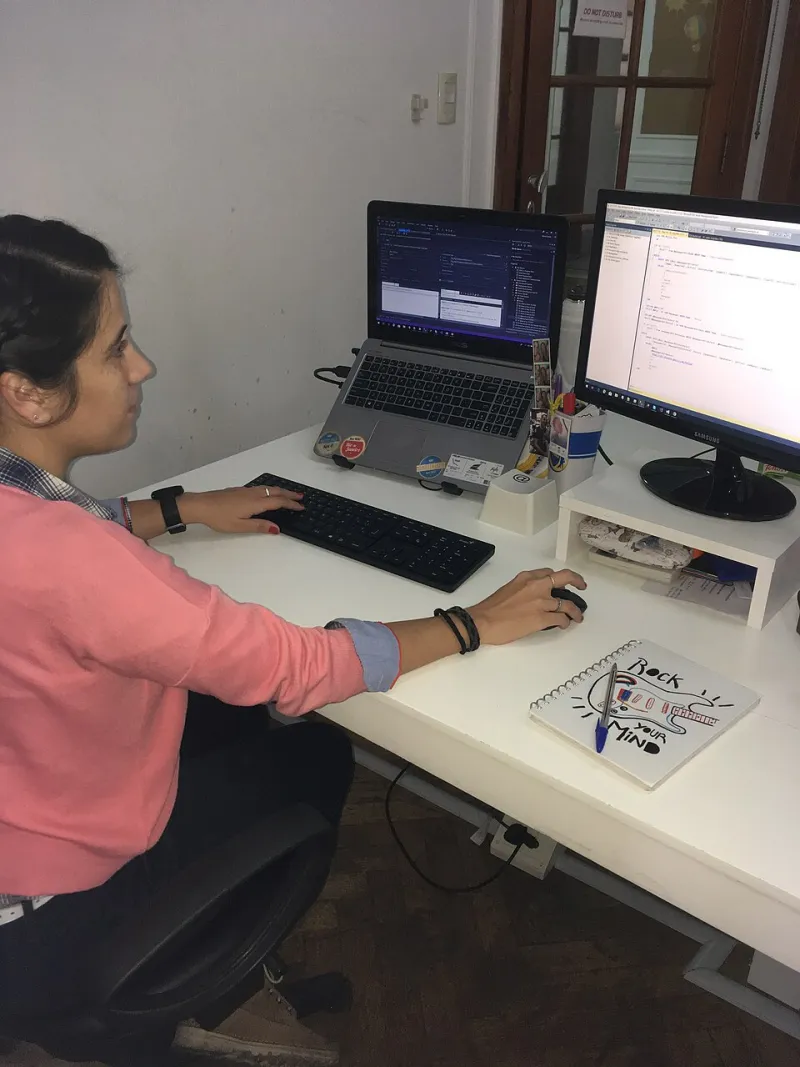
Photo: Cheluliada, CC BY-SA 4.0, via Wikimedia Commons
The Problem with Convenience
Modern infrastructure tooling has never been more accessible. A developer in Austin or Seattle can spin up a containerized microservice stack in minutes, configure a Kubernetes cluster through a managed cloud console, and deploy a production workload without ever touching a kernel parameter. That accessibility is genuinely valuable—but it comes with a hidden cost.
For many DevOps professionals, the operating system has become a black box. Containers run on Linux, but the engineers orchestrating them often have only a surface-level understanding of what that means in practice. When something breaks at a level below the application layer, the troubleshooting options narrow quickly.
That gap is precisely what drew five DevOps engineers to the Linux From Scratch project—and what made the experience transformative rather than merely educational.
Meeting the Engineers
The five professionals featured here span a range of backgrounds and employer types: a senior site reliability engineer at a fintech company in Chicago, a platform engineer at a mid-sized SaaS provider in Denver, a DevOps lead at a federal contractor based in Northern Virginia, a systems engineer at a semiconductor firm in the San Jose area, and an independent infrastructure consultant working remotely from Portland. All five completed a full LFS build within the past eighteen months. Their accounts were gathered through individual conversations and have been condensed for clarity.
None of them described the experience as easy. All five described it as essential.
'I Finally Understood What a Process Actually Is'
Marcus, the SRE in Chicago, had spent four years managing Linux-based systems before attempting an LFS build. He was comfortable with systemd, proficient with cgroups, and fluent in the operational vocabulary of modern infrastructure. What he lacked, he realized, was a mental model for how those components fit together at a foundational level.
"I had been working with containers for years, and I understood them conceptually," he said. "But when I built my first LFS system and had to manually configure the proc filesystem, set up device nodes, and think through how the kernel hands off to init—something clicked. I went back to work and looked at our container runtime setup differently. I could see what the container was abstracting, not just that it was abstracting something."
That shift in perspective had direct professional consequences. Within three months of completing his LFS build, Marcus led a performance audit of the company's container base images that identified unnecessary kernel modules being loaded at runtime. The resulting optimization reduced average container startup time by a measurable margin.
Debugging Without a Safety Net
Rachel, the platform engineer in Denver, approached LFS specifically because she wanted to improve her debugging instincts. Her team had recently migrated to a custom Linux distribution for edge computing nodes, and troubleshooting failures in that environment required a level of low-level familiarity she felt she lacked.
"The LFS book forces you to confront every decision," she explained. "You're not just installing a package—you're understanding why that package exists, what it links against, what breaks if it's absent. When I had a kernel panic during my first build attempt, I didn't just reinstall and move on. I had to understand what caused it."
That particular kernel panic, she noted, stemmed from a misconfigured initramfs—a mistake she would have previously resolved by copying a working configuration from a colleague. Instead, she traced through the boot process manually, identified the missing module specification, and corrected it herself. The knowledge she gained from that single debugging session later helped her resolve a production boot failure on an edge node that had stumped two other engineers.
Infrastructure Automation Grounded in Reality
David, the DevOps lead in Northern Virginia, works in an environment where compliance requirements make custom system images a practical necessity rather than an academic exercise. His team maintains hardened Linux images for government workloads, and the ability to justify every package and configuration decision is not optional.
"When you write an Ansible playbook or a Packer template, you're making assumptions about what the base system looks like," he said. "LFS removes all those assumptions. You know exactly what's there because you put it there. That changes how you write automation—you stop working around unknowns and start working with knowns."
David now incorporates elements of the LFS methodology into his team's image-building pipeline. New team members are encouraged—though not required—to work through at least the core chapters of the LFS book before contributing to the hardened image project. He reports that those who do tend to write more precise and maintainable automation scripts.
The Containerization Connection
Among the most consistent themes across all five accounts was the relationship between LFS experience and a deeper understanding of containerization. Sandra, the systems engineer near San Jose, articulated this connection most directly.
"A container is just a process with namespace isolation and a controlled filesystem view," she said. "That's not a complicated idea, but it becomes genuinely intuitive once you've built the filesystem yourself. When I look at a Dockerfile now, I think about it in terms of layers over a base that I understand from the ground up. It's a different kind of confidence."
Sandra's LFS experience also informed her approach to multi-stage builds. By understanding exactly which shared libraries a compiled binary requires, she was able to produce significantly leaner final-stage images for several internal tools—reductions that translated into lower registry storage costs and faster pull times across the team's CI/CD pipeline.
Time Investment and Realistic Expectations
None of the five engineers minimized the time commitment involved. Estimates ranged from roughly forty hours for the most experienced builder to over eighty hours for those who encountered significant obstacles or chose to explore optional components. All five emphasized that the investment is front-loaded—the early chapters, which involve constructing a temporary toolchain and cross-compiling core utilities, are the most demanding and the least immediately rewarding.
James, the Portland-based consultant, offered the most pragmatic framing: "Think of it as a graduate seminar you give yourself. You wouldn't expect a semester-long course to fit into a weekend. Set aside real time, keep notes, and don't rush the parts that confuse you. The confusion is where the learning happens."
Why It Still Matters in 2024
The argument for building Linux from scratch is not nostalgic. It is not about rejecting modern tooling or proving technical purity. The five engineers profiled here are active users of Kubernetes, Terraform, Docker, and the full spectrum of contemporary DevOps infrastructure. Their LFS experience did not pull them away from those tools—it made them more effective practitioners of them.
Understanding a system at the level of its construction changes the quality of the questions an engineer asks. It changes the instincts brought to a production incident at two in the morning. It changes the confidence with which an architect evaluates a new tool against the substrate it will run on.
For DevOps professionals looking to deepen their technical foundation in a field that increasingly rewards abstraction over understanding, building Linux from scratch remains one of the most direct paths available. The source code has always been there. The question is whether you are ready to read it.
